
Department of Electrical & Electronics Engineering (EEE)
Powering Progress – Energizing the Future
Department of Electrical & Electronics Engineering
The EEE Department was established in the year 2007 with an annual intake of 60 students. The Department has the requisite number of faculty members, striving to incorporate excellence in theory and practice. The Department of Electrical & Electronics Engineering has a class reputation for both teaching and research work. Students and parents satisfaction is very high because we regularly conduct campus selections, and over 90% of our graduates have found relevant employment in public and private sectors within six months of leaving College.
All the teaching staff of the Department are Post-Graduates in Electrical Engineering. The Department comprises 1 Professor, 2 Associate Professors and 13 Assistant Professors. The Students of this Department are regularly exposed to the latest trends in the field of Electrical Engineering, because, we conduct Guest Lectures, Conferences, and Workshops etc., and take them for regular industrial visits. Extra experiments are being conducted for all classes apart from the regular experiments prescribed by the JNTU.
Staff members of this Department are encouraged to better their qualifications and get involved in research. The staff and students of EEE department organized the Robotics war in the two days technical fest conducted by the college. The students of the department also participated in the NSS program.
Labs
The following labs equipped with the latest equipment enhance the learning experience of the students.
- DC Machines Lab
- Electrical circuits Lab
- AC Machines Lab
- Electrical Measurements Lab
- Control Systems Lab
- Power Electronics Lab
- Power System Laboratory
- Electrical and Electronics Design Lab
- Power System Simulation Lab
Highlights
Each lab is constructed with modern facilities. Each lab is equipped with demo experiments along with the university prescribed experiments. The motors and instruments etc., are opened and exhibited on tables in the laboratories for clear understanding of the students. In Electrical Measurements Lab, Power electronics Lab and the Networks lab each student operates on only one set-up independently. In the Power Electronics lab and Networks Lab each set-up is customized and equipped with an oscilloscope, Ac and regulated Dc power supplies, digital panel maters and bread boards. In the Control Systems Lab apart from the prescribed equipment, a highly sophisticated set-up supplied by M/s.Techtrack, futuretech is available to study the response to various up dates to the system. The DC & AC Machines Lab has been organized on the industrial pattern. These laboratories have been established with internal expertise.
Vision & Mission
PEO, PSO, PO
Course Outcomes(CO)
PAQIC
HOD
Faculty
Labs
Functional Committee
Vision
To produce cutting-edge Electrical and Electronics Engineers, innovators, researchers, and entrepreneurs with high human values to serve society, industry, nation and the world.
Mission
- To provide comprehensive technical knowledge to student through quality teaching-learning to coup with challenges in Electrical and Electronics Engineering.
- To enable students, develop skills in solving complex engineering problems of current times and also provide a framework for promoting collaborative and multidisciplinary activities.
-
To learn latest technologies and to create various opportunities for students of electrical and electronics engineering platform prevalent to industries.
Program Educational Objectives (PEOs)
Electrical Engineering graduates will be
PEO1: Able to utilize the acquired knowledge for analyzing and resolving practical Electrical Engineering problems.
PEO2: Imbibed with the aptitude for solving industry problems with the help of modern tools and design.
PEO3: Equipped to involve in research, higher studies and to become entrepreneur that caters to the need of industry and society.
Program Specific Outcomes (PSOs)
Electrical Engineering graduates will have the:
PSO1:Comprehensive knowledge of electrical systems, components and processes to address technical and engineering challenges in real life.
PSO2:Aptitude to provide technical solutions to complex electrical engineering problem with the application of modern and appropriate tools for sustainable development
Program Outcomes (POs)
PO1: Ability to apply knowledge of mathematics, science and engineering, knowledge
PO2: Ability to design and conduct experiments, as well as to analyze and interpret data, Experimentation & Interpret/Engineering Analysis.
PO3: Ability to design a system, component or process to meet desired needs within realistic
constraints such as economic, environmental, social, Political, ethical, health and safety
PO4: Ability to identify, formulate and solve complex engineering problems.
PO5: Ability to use techniques, skills and modern engineering tools necessary for engineering practice.
PO6: Knowledge of contemporary issues, and non-contemporary issues, non technical issues, global awareness with society concern.
PO7:The broad education necessary to understand the impact of engineering solutions in global economic, environmental and social context.
PO8:Understanding of professional and ethical responsibility.
PO9: Ability to function on multidisciplinary teams.
PO10:Ability to communicate effectively.
PO11:To prepare the students ready for industry usage by providing required training in cutting edge technologies for project management
PO12:Recognition of the needs and an ability to engage in lifelong learning.
Course Outcomes (CO)
|
S.No |
Year/ Sem |
Course Name |
Course Outcomes |
|
1 |
II-I |
ELECTRICAL CIRCUIT ANALYSIS |
CO1: Apply network theorems for the analysis of electrical circuits |
| CO2: Obtain the transient and steady-state response of electrical circuits. | |||
| CO3: Analyze circuits in the sinusoidal steady-state (single-phase and three-phase). | |||
| CO4: Analyze steady-state responses and transient response of DC and AC circuits using classical and Laplace transform methods. | |||
| CO5: Analyze two port circuit behavior. | |||
|
2 |
II-I |
ELECTRICAL MACHINES – I |
CO1: Identify different parts of a DC machine & understand its operation |
| CO2: ToCarry out different testing methods to predetermine the efficiency of DC machines. |
|||
| CO3: ToUnderstand different excitation and starting methods of DC machines. | |||
| CO4: Control the voltage and speed of a DC machines. | |||
| CO5: Analyze single phase and three phase transformers circuits. | |||
|
3 |
II-I |
ELECTRO MAGNETIC FIELDS |
CO1:Understand the Basic laws of Electromagnetism. |
| CO2:Obtain the Electric and Magnetic fields for simple configurations | |||
| CO3: Analyze theTime varying electric and magnetic fields. | |||
| CO4: Understand the Maxwell’s Equations in Different Forms and Different media | |||
| CO5: Understand the Propagation of EM waves | |||
|
4 |
II-I |
ENGINEERING MECHANICS |
CO1: Determine resultant of forces acting on a body and analyze equilibrium of a body subjected to a system of forces. |
| CO2: Solve problem of bodies subjected to friction | |||
| CO3: Find the location of centroid and calculate moment of inertia of a given section. | |||
| CO4: Understand the kinetics and kinematics of a body undergoing rectilinear, curvilinear, rotatory motion and rigid body motion | |||
| CO5: Solve problems using work energy equations for translation, fixed axis rotation and plane motion and solve problems of vibration | |||
|
5 |
II-I |
ANALOG ELECTRONICS |
CO1:Know the characteristics, utilization of various components. |
| CO2:Understand the biasing techniques | |||
| CO3:Design and analyze various rectifiers, small signal amplifier circuits. | |||
| CO4:Design sinusoidal and non-sinusoidal oscillators. | |||
| CO5: A thorough understanding, functioning of OP-AMP, design OP-AMP based circuits | |||
|
6 |
II-I |
ELECTRICAL MACHINES LAB – I |
CO1: Observe Start and control the Different DC Machines. |
| CO2: Assess the performance of different machines using different testing methods. | |||
| CO3: Identify different conditions required to be satisfied for self – excitation of DC Generators.. |
|||
| CO4: Separate iron losses of DC machines into different components. | |||
| CO5: Calculating different parameters in Machines. | |||
|
7 |
II-I |
ANALOG ELECTRONICS LAB |
CO1: Analyze the diode and transistor characteristics. |
| CO2: Understand the principles of rectifier circuits using diodes and implement them usinghardware. | |||
| CO3: Design various amplifiers like CE, CC, common source FET amplifiers and implement them using hardware and also observe their frequency responses. | |||
| CO4: Understand the concepts of Oscillators and observe its frequency responses. | |||
| CO5:Understand the Inverting and non inverting amplifier and observe its characteristics. | |||
|
8 |
II-I |
ELECTRICAL CIRCUITS LAB |
CO1: Analyze complex DC and AC linear circuits |
| CO2: Apply concepts of electrical circuits across engineering | |||
| CO3: Evaluate response in a given network by using theorems | |||
| CO4: Evaluation and analysis of two-port network parameters. | |||
| CO5: Evaluation of active and reactive powers | |||
|
9 |
II-II |
LAPLACE TRANSFORMS, NUMERICAL METHODS & |
CO 1: Use the Laplace transforms techniques for solving ODE’s |
| CO 2: Find the root of a given equation | |||
| CO 3: Estimate the value for the given data using interpolation | |||
| CO4: Find the numerical solutions for a given ODE’s | |||
| CO 5: Analyze the complex function with reference to their analyticity, integration using Cauchy’s integral and residue theorems | |||
| CO 6: Taylor’s and Laurent’s series expansions of complex function | |||
|
10 |
II-II |
ELECTRICAL MACHINES – II |
CO 1: Understand the concepts of rotating magnetic fields. |
| CO 2: Understand the operation of ac machines | |||
| CO 3: Analyze performance characteristics of ac machine | |||
| CO 4: Understand the concept of parallel operation of alternator | |||
| CO 5: Understand the concept of regulation and its calculations | |||
|
11 |
II-II |
DIGITAL ELECTRONICS |
CO1: Understand working of logic families and logic gates. |
| CO2: Design and implement Combinational and Sequential logic circuits. | |||
| CO3: Design and implement Sequential logic circuits. | |||
| CO4: Understand the process of Analog to Digital conversion and Digital to Analog conversion. | |||
| CO5:Be able to use PLDs to implement the given logical problem | |||
|
12 |
II-II |
CONTROL SYSTEMS |
CO1: Understand the modeling of linear-time-invariant systems using transfer function and states paceRepresentations. |
| CO2: Understand the concept of stability and its assessment for linear-time invariant systems | |||
| CO3: Design simple feedback controllers. | |||
| CO4: Identify Time Response of The Second order System | |||
| CO5: Understandthe Controllability and Observability | |||
|
13 |
II-II |
POWER SYSTEM – I |
CO1: Understand the concepts of power systems. |
| CO2: Understand the operation of conventional generating stations and renewable sources of electrical power. |
|||
| CO3: Evaluate the power tariff methods. | |||
| CO4: Determine the electrical circuit parameters of transmission lines | |||
| CO5: Understand the layout of substation and underground cables and corona. | |||
|
14 |
II-II |
DIGITALELECTRONICS LAB |
CO1: Learn the basics of gates. |
| CO2:Construct basic combinational circuits and verify their functionalities. | |||
| CO3:Apply the design procedures to design basic sequential circuits. | |||
| CO4:Learn about counters and Shift registers. | |||
| CO5: To understand the basic digital circuits and to verify their operation | |||
|
15 |
II-II |
ELECTRICAL MACHINES LAB – II |
CO1:Analyze the performance of different machines using different testing methods |
| CO2:Analyze the Phase from three phase to two phase and vice versa | |||
| CO3:Understand the changes in terminal voltages of synchronous generator after estimating the change by different methods | |||
| CO4:Understand Control the active and reactive power flows in synchronous machines | |||
| CO5:Understand the Start different machines and control the speed and power factor | |||
|
16 |
II-II |
CONTROL SYSTEMS LAB |
CO1: Learnto improve the system performance by selecting a suitable controller and/or acompensator for a specific application |
| CO2: Apply various time domain and frequency domain techniques to assess the systemperformance | |||
| CO3: Apply various control strategies to different applications (example: Power systems, electricaldrives etc.) | |||
| CO4: Test system controllability and observability using state space representation and applications of state space representation to various systems | |||
| CO5: Identify the transfer function and analyze the time response of DC motor | |||
|
17 |
III-I |
POWERELECTRONICS |
CO1: Understand the differences between signal level and power level devices |
| CO2: Analyze controlled rectifier circuits. | |||
| CO3: Analyze the operation of DC-DC choppers. | |||
| CO4: Analyze the operation of voltage source inverters. | |||
| CO5: Analyze the operation of AC voltage controllers and Cycloconverters | |||
|
18 |
III-I |
POWER SYSTEM-II |
CO1: Analyze transmission line performance. |
| CO2: Apply load compensation techniques to control reactive power | |||
| CO3: Understand the application of per unit quantities | |||
| CO4: Design over voltage protection and insulation coordination | |||
| CO5: Determine the fault currents for symmetrical and unbalanced faults | |||
|
19 |
III-I |
MEASUREMENTS AND INSTRUMENTATION |
CO1:Understand Different types of Measuring instruments, construction & Operation |
| CO2: Identify the Instruments suitable for Typical Measurements. | |||
| CO3:Analyze the knowledge about Transducers and instrument transformers to use them effectively | |||
| CO4:Apply the knowledge of smart and digital metering for industrial applications | |||
| CO5: Understand the construction, working principle and types of oscilloscopes. | |||
|
20 |
III-I |
HIGH VOLTAGE ENGINEERING (PROFESSIONAL ELECTIVE-I) |
CO1:Understand the basic physics related to various breakdown processes in solid, liquid andgaseous insulating materials. |
| CO2: Knowledge of generation and measurement of D. C., A.C., & Impulse voltages. | |||
| CO3: Knowledge of tests on H. V. equipment and on insulating materials, as per the standards. | |||
| CO4: Knowledge of how over-voltages arise in a power system, and protection against these overvoltages. | |||
| CO5: Compute the breakdown strength of gas, liquids and solids insulation systems | |||
|
21 |
III-I |
BUSINESSECONOMICS ANDFINANCIAL ANALYSIS |
CO1: Evaluate the production function and identifies the least cost combination to control the costs of production. |
| CO2: Understand the concepts of Business economics and their application in evaluating the demand | |||
| CO3: Analyzethe structures of various market types and theirpricing policies. | |||
| CO4: Understand the types of business forms and also be able to evaluate the investments using capital budgeting techniques. | |||
| CO5: Apply the basic concepts of ratio analysis | |||
|
22 |
III-I |
POWER SYSTEM SIMULATION LAB |
CO1: Perform various transmission line calculations |
| CO2: Understand Different circuits time constants | |||
| CO3: Analyze the experimental data and draw the conclusions | |||
| CO4: Understand the high frequency transients | |||
| CO5: Perform Tariff Estimation | |||
|
23 |
III-I |
POWER ELECTRONICS LAB |
CO1: Understand the operating principles of various power electronic converters |
| CO2: Understand the use power electronic simulation packages & hardware to develop the power converters. | |||
| CO3: Analyze and choose the appropriate converters for various applications | |||
| CO4: Apply the concepts of power electronic converters for efficient conversion/control of power from source to load | |||
| CO5: Design the power converter with suitable switches meeting a specific load requirement. | |||
|
24 |
III-I |
MEASUREMENTS ANDINSTRUMENTATION LAB |
CO1:Understand to choose instruments |
| CO2:Analyze thetest any instrument | |||
| CO3:Perform the accuracy of any instrument by performing experiment | |||
| CO4:Calibrate PMMC instrument using D.C potentiometer | |||
| CO5: Understand the concept of measurement& error | |||
|
25 |
III-I |
ADVANCED COMMUNICATION SKILLS LAB |
CO1: To enable the students to listen to English conversation thereby improving their fluency. |
| CO2: To make students acquire vocabulary and used it contextually. | |||
| CO3: To develop proficiency in academic reading and writing. | |||
| CO4: To increase possibilities of job prospects | |||
| CO5: To communicate confidently in formal and informal context. | |||
|
26 |
III-II |
DISASTER PREPAREDNESS & PLANNING MANAGEMENT (OPENELECTIVE-I) |
CO1:The application of disaster concepts to management. |
| CO2:Analyzing relationship between development and disasters | |||
| CO3: Ability to understandcategories of disasters. | |||
| CO4:Realization of the responsibilities to society | |||
|
27 |
III-II |
WIND AND SOLARENERGY SYSTEMS (PROFESSIONAL ELECTIVE-II) |
CO1:Understand the energy scenario and the consequent growths of the power generate Renewable energy sources |
| CO2:Understand the Basic Physics of wind and solar power generation | |||
| CO3:Understand the power electronic interfaces for wind and solar generation | |||
| CO4:Understand the issues Related to the Grid Integration of solar & wind energy system | |||
| CO5: Perform able to Understand the solar energy operation & its characteristics. | |||
|
28 |
III-II |
SIGNALS AND SYSTEMS |
CO1: Differentiate various signal functions.. |
| CO2: Represent any arbitrary signal in time and frequency domain | |||
| CO3: Understand the characteristics of linear time invariant systems. | |||
| CO4: Analyze the signals with different transform technique | |||
| CO5: Analyze discrete time signals and systems by using appropriate mathematical tools | |||
|
29 |
III-II |
MICRO PROCESSORS & MICROCONTROLLERS |
CO1: Understands the internal architecture, organization and assembly language programming of 8086 processors. |
| CO2: Understands the internal architecture, organization and assembly language programming of 8051 microcontrollers | |||
| CO3: Understands the interfacing techniques to 8086 and 8051 based systems. | |||
| CO4: Understands the internal architecture of ARM processors and basic concepts of advanced ARM | |||
| CO5 :Design electrical circuitry to the Microprocessor I/O ports in order to | |||
|
30 |
III-II |
POWER SYSTEM PROTECTION |
CO1:Compare and contrast electromagnetic, static and microprocessor-based relays |
| CO2:Apply technology to protect power system components. | |||
| CO3: Select relay settings of over current and distance relays. | |||
| CO4: Analyze quenching mechanisms used in air, oil and vacuum circuit breakers | |||
| CO5: Grasp the knowledge of different protection schemes of transformer, bus-bar, generators and motor | |||
|
31 |
III-II |
POWER SYSTEMOPERATION ANDCONTROL |
CO1: Understand operation and control of power systems |
| CO2: Analyze various functions of Energy Management System (EMS) functions | |||
| CO3: Analyze whether the machine is in stable or unstable position | |||
| CO4: Understand power system deregulation and restructuring | |||
| CO5: Understand real time control of power systems | |||
|
32 |
III-II |
POWER SYSTEM LAB |
CO1: Analyze sequence impedance of synchronous machine and transformers |
| CO2: Understand Different protection methods | |||
| CO3: Analyze the experimental data and draw the conclusions | |||
| CO4: Understand modeling of transmission line | |||
| CO5: Perform various load flow techniques | |||
|
33 |
III-II |
MICRO-PROCESSORS & MICRO-CONTROLLERS LAB |
CO1: Set up programming strategies for Microprocessor, microcontrollers and select proper mnemonics and run their program on the training boards. |
| CO2: Practice different types of programming keeping in mind technical issues and evaluate possible causes of discrepancy in practical experimental observations in comparison | |||
| CO3: Develop testing and experimental procedures on Microprocessor analyze their operation under different | |||
| CO4: Prepare professional quality textual and computational results using assembly language programming | |||
| CO5: Develop testing and experimental procedures on Microcontroller analyze their operation under different cases. | |||
|
34 |
III-II |
SIGNALS AND SYSTEMS LAB |
CO1 Understand the concepts of continuous time and discrete time systems. |
| CO2 Analyze systems in complex frequency domain. | |||
| CO3 Understand sampling theorem and its implications | |||
| CO4 Understand the concepts of continuous time and discrete time systems. | |||
| CO5 To analyze sampling principles and various transform techniques. | |||
|
35 |
IV-I |
PRINCIPLES OFENTREPRENEURSHIP (OPEN ELECTIVE-II) |
CO1Understand the concept and mindset of the entrepreneurs |
| CO2Understand the entrepreneurs Personality, journey and Entrepreneurial competencies | |||
| CO3Knows techniques for generating ideas and Launching Entrepreneurial Ventures | |||
| CO4Learn Legal challenges of Entrepreneurship | |||
| CO5Evaluate Strategies for building entrepreneurship | |||
|
36 |
IV-I |
ELECTRICAL AND HYBRID VEHICLES (PROFESSIONAL ELECTIVE-III) |
CO1Understand the fundamental concepts, principles, analysis and design of hybrid andelectricvehicles |
| CO2 Know the various aspects of hybrid and electric drive train such as theirconfiguration, typesof electric machines that can be used energy storage devices | |||
| CO3 Understand the models to describe hybrid vehicles and their performance | |||
| CO4 Understand the different possible ways of energy storage | |||
| CO5 Understand the different strategies related to energy storage systems | |||
|
37 |
IV-I |
HVDC TRANSMISSION (PROFESSIONAL ELECTIVE-IV) |
CO1:Compare EHV AC and HVDC system and to describe various types of DC links |
| CO2:Analyze Graetz circuit for rectifier and inverter mode of operation | |||
| CO3:Describe various methods for the control of HVDC systems and to perform power flow analysisin AC/DC systems | |||
| CO4:Describe various protection methods for HVDC systems and classify Harmonics and designdifferent types of filters | |||
| CO5: Study and understand various components, faults and breaker operation in HVDC Systems | |||
|
38 |
IV-I |
FUNDAMENTALS OF MANAGEMENT FOR ENGINEERS |
CO1: Perform own leadership style |
| CO2: Understand HR fundamentals and how to implement them in the workplace | |||
| CO3: Analyze Effectively build relationships in the workplace | |||
| CO4: Understand and Recognize the key differences between management and individual contributor roles | |||
| CO5: Acquirestrategic practices for managing employees and their work | |||
|
39 |
IV-I |
ELECTRICAL &ELECTRONICS DESIGN LAB |
CO1: Get practical knowledge related to electrical |
| CO2: Fabricate basic electrical circuit elements/networks | |||
| CO3: Get hardware skills such as soldering, winding etc | |||
| CO4: Get hardware skills such as soldering, winding etc | |||
| CO5: Design filter circuit for application | |||
|
40 |
IV-I |
INDUSTRIAL ORIENTED MINI PROJECT/ SUMMER INTERNSHIP |
CO1: Acquire basic knowledge and practical knowledge to implement towards industries. |
| CO2: Design and testing of electrical components | |||
| CO3: Apply project management skills (scheduling work, procuring parts, and documenting expenditures and working within the confines of a deadline). | |||
| CO4: Develop and demonstrate troubleshooting ability in Electrical technology. | |||
| CO5: Communicate technical information by means of written and oral reports. | |||
|
41 |
IV-I |
SEMINAR |
CO1: Spell for basic concepts of science and technology |
| CO2: Contrast the understanding perceptive of techniques applicable to their domain | |||
| CO3: Construct the solutions upon their own knowledge | |||
| CO4: Improve their Presentation and Communication skills | |||
| CO5: Make up them to pursue their placements and higher studies | |||
|
42 |
IV-I |
PROJECT STAGE – I |
CO1: Acquire basic knowledge and practical knowledge to implement towards industries. |
| CO2: Design and testing of electrical components | |||
| CO3: Apply project management skills (scheduling work, procuring parts, and documenting expenditures and working within the confines of a deadline). | |||
| CO4: Develop and demonstrate troubleshooting ability in Electrical technology. | |||
| CO5: Communicate technical information by means of written and oral reports. | |||
|
43 |
IV-II |
ENVIRONMENTAL IMPACT ASSESSMENT (OPEN ELECTIVE-III) |
CO1: Understanding of the historical evolution of EIA |
| CO2: Identify the environmental attributes to be considered for the EIA study | |||
| CO3: Formulate objectives of the EIA studies | |||
| CO4: Identify the methodology to prepare rapid EIA | |||
| CO5: Prepare EIA reports and environmental management plans | |||
|
44 |
IV-II |
POWER QUALITY & FACTS (PROFESSIONAL ELECTIVE-V) |
CO1:Understand the severity of power quality problems in distribution system Concept of improving the power quality to sensitive load by various mitigating custom power devices |
| CO2:Understand the concept of voltage sag transformation from up-stream (higher voltages) to down-stream (lower voltage) | |||
| CO3:Understand various systems thoroughly and their requirements and control circuits of Shunt Controllers SVC STATCOM for various functions viz. |
|||
| CO4:Analyze the transient stability Enhancement, voltage instability prevention and power oscillation damping | |||
| CO5:Understand the Power and control circuits of Series Controllers GCSC, TSSC and TCSC | |||
|
45 |
IV-II |
ELECTRICAL |
CO1:Distinguish between transmission, and distribution line and design the feeders |
| CO2:Compute power loss and voltage drop of the feeders | |||
| CO3:Design protection of distribution systems | |||
| CO4: Understand the importance of voltage control and power factor improvement | |||
| CO5:Identify the best methods for pf improvement and voltage control | |||
|
46 |
IV-II |
PROJECT STAGE – II |
CO1: Acquire basic knowledge and practical knowledge to implement towards industries. |
| CO2: Design and testing of electrical components | |||
| CO3: Apply project management skills (scheduling work, procuring parts, and documenting expenditures and working within the confines of a deadline). | |||
| CO4: Develop and demonstrate troubleshooting ability in Electrical technology. | |||
| CO5: Communicate technical information by means of written and oral reports. |
PAQIC
Program Assessment and Quality Improvement Committee
The departmental academic committee is responsible for smooth functioning and monitoring of all academic activities.
Composition
Head of the department – Convenor
Three to Five senior faculty members in the department nominated by HOD – Members.
Members to the PAQIC UG and PG) will be opted covering each specialization of the department. In very small departments one or more faculty members of other departments may be opted by the HOD with approval of Dean of Academic. One or more external members may be opted by the Convenor, PAQIC on specific occasions such as making the syllabus for new courses, updating / modifying of present syllabus etc. The tenure of the departmental academic committee shall be two years. The composition of the PAQIC shall need approval of the Principal.
Functionalities of PAQIC
Decide the course structure, detailed syllabus, value added course, professional and open electives, mandatory courses and MOOC courses offered by the department.
Assign teaching duties to the faculty and to make the facilities available for quality of teaching.
Allocation of faculty mentors to the new batch of students admitted.
Review the cases of slow / weak students and decide appropriate action in advance in coordination with faculty mentors.
Monitoring continuously by the student’s performance and take necessary actions.
Guide faculty members towards ensuing continuous evaluation.
Ensuring discipline among students.
Facilitating and supervising the co-curricular and extracurricular activities of the students.
Decide award of medals and prizes wherever available based on departmental merit or activities.
The PAQIC will meet as often as necessary. Faculty mentors and other members of the faculty may be invited to meetings when necessary. The PAQIC will seek and review the reports of all course handling faculty and faculty mentors and submit its reports to HOD for remedial action if so needed. The PAQIC recommendations may, if situation so demands to be discussed and amended by a meeting of the total faculty in a department.
|
S No |
Name of the member |
Designation |
Status |
|
1 |
Dr. Rajesh Kumar Samala |
Associate Professor |
Chairman |
|
2 |
Dr Y Prakash
|
Professor
|
Co-Chairman
|
|
3
|
Dr. P. Sudhakar |
Associate Professor |
Programme Co-Ordinatorr |
|
4 |
Mr S Rajesh |
Assistant Professor |
Seniour Faculty Member |
|
5 |
Mr D Subramanyami |
Assistant Professor |
Seniour Faculty Member |
|
6
|
Mr V Ravi kumar |
Assistant Professor |
Seniour Faculty Member |
|
7
|
Mrs Upre Yojana
|
Assistant Professor
|
Seniour Faculty Member
|
|
8
|
Mrs Sravanthi
|
Assistant Professor
|
Seniour Faculty Member
|
|
9
|
Ms R Aruna
|
Assistant Professor
|
Faculty Member
|
|
10
|
Ms P Shobha
|
Assistant Professor
|
Faculty Member
|
|
11
|
Mr Soddulu
|
Assistant Professor
|
Faculty Member
|
|
12
|
Mr A Srinivasula
|
Assistant Professor
|
Faculty Member
|
|
13
|
Mr K Rajkumar
|
Assistant Professor
|
Faculty Member
|
|
14
|
Mrs P Sujjarella
|
Assistant Professor
|
Faculty Member
|
From the HOD’s Desk –Electrical & Electronics Engineering
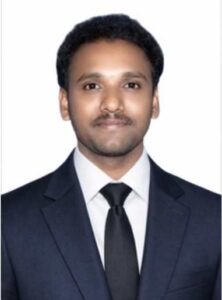
Dr. Rajesh Kumar Samala
M.Tech., Ph.D.
Assoc. Professor
Dr. Rajesh Kumar Samala obtained his Ph.D. in Power Systems from Vignan’s University, Guntur (2016–2020). He completed his M.Tech in Power Engineering and Energy Systems from Mahaveer Institute of Science and Technology, Hyderabad (2008–2011), B.Tech in Electrical and Electronics Engineering from Vardhaman College of Engineering, Hyderabad (2004–2007), and Diploma in Electrical and Electronics Engineering from Government Polytechnic, Nizamabad (1999–2002), after completing his SSC from Vivekavardhani High School, Sundilla (1998–1999).
He has over 15 years of teaching and academic experience, currently serving as Head of the Department and Associate Professor at Visvesvaraya College of Engineering and Technology, Hyderabad (2022–Present).
Previously, he worked as Head of the Department and Assistant Professor at Sree Chaitanya College of Engineering, Karimnagar (2020–2022) and as Assistant Professor at Nalla Narasimha Reddy Group of Institutions, Hyderabad (2012–2016), Mahaveer Institute of Science and Technology, Hyderabad (2011–2012), and St. Mary’s College of Engineering and Technology, Hyderabad (2007–2008).
Dr. Rajesh Kumar Samala has made significant research contributions with 19 journal publications in reputed international journals, focusing mainly on optimization techniques and distributed generation in power systems.
He has authored one book titled “Analysis of Artificial Intelligence Based Hybridization for Optimal Allocation of Distributed Generations and Economic Power Dispatch in Radial and Mesh Configuration Systems” (BPB Publications, 2022) and contributed three book chapters in international edited volumes related to swarm intelligence and renewable energy trends.
He also holds one Indian patent titled “An IoT Based Smart System to Read the ECG and Alert the Consultant in Case of Emergencies” (2022). In addition, he has participated in several conferences, conference paper presentations, and professional workshops related to electrical engineering and emerging technologies.
His research interests include distributed generation, smart grids, renewable energy systems, artificial intelligence applications in power systems, economic power dispatch, power quality improvement, and hybrid optimization algorithms for radial and mesh distribution networks.
Electrical & Electronics Engineering(EEE)
All The Staff are Ratified by JNTUH
|
S.No
|
Name of the Faculty
|
Designation
|
Qualification
|
DOJ
|
Nature Of Association (Regular / Contract)
|
|---|---|---|---|---|---|
|
1
|
Dr.Samala Rajesh Kumar
|
Asoc.Professor
|
Ph.D
|
05.06.2021
|
Regular
|
|
2
|
Dr.Prakash.Y
|
Professor
|
Ph.D
|
19.02.2018
|
Regular
|
|
3
|
Dr.P.Sudhakar
|
Asoc.Professor
|
Ph.D
|
02.03.2021
|
Regular
|
|
4
|
P.Sujjarella
|
ASST.PROF
|
M.TECH
|
10.02.2017
|
Regular
|
|
5
|
K.Rajkumar
|
ASST.PROF
|
M.TECH
|
30.04.2018
|
Regular
|
|
6
|
P.Shoba
|
ASST.PROF
|
M.TECH
|
30.06.2018
|
Regular
|
|
7
|
A.Soddulu
|
ASST.PROF
|
M.TECH
|
29.02.2020
|
Regular
|
|
8
|
Upre Yojana
|
ASST.PROF
|
M.TECH
|
04.01.2020
|
Regular
|
|
9
|
Rupavath Aruna
|
ASST.PROF
|
M.TECH
|
21.06.2021
|
Regular
|
|
10
|
Sale Rajesh
|
ASST.PROF
|
M.TECH (Ph.D)
|
25.02.2022
|
Regular
|
|
11
|
B.Sravanthi
|
ASST.PROF
|
M.TECH
|
01.06.2019
|
Regular
|
|
12
|
A.Srinivasulu
|
ASST.PROF
|
M.TECH
|
24.02.2022
|
Regular
|
|
13
|
D.Subramanyam
|
ASST.PROF
|
M.TECH,(Ph.D)
|
22.02.2022
|
Regular
|
|
14
|
G. Lavan Kumar
|
ASST.PROF
|
M.TECH
|
15.05.2023
|
Regular
|
|
15
|
B. Rajesh
|
ASST.PROF
|
M.TECH
|
15.05.2023
|
Regular
|
|
16
|
V.Ravi Kumar
|
ASST.PROF
|
M.TECH
|
27.05.2019
|
Regular
|
|
17
|
K.Venkata Ramaiah
|
ASST.PROF
|
M.TECH
|
25.02.2015
|
Regular
|
|
18
|
A.Kurmaiah
|
ASST.PROF
|
M.TECH
|
03.07.2012
|
Regular
|
|
19
|
V.Venu Gopal
|
ASST.PROF
|
M.TECH
|
20.06.2018
|
Regular
|
|
20
|
R.Lalitha
|
ASST.PROF
|
M.TECH
|
26.06.2019
|
Regular
|
|
21
|
Dr.R.L.Narasimham
|
Asoc.Professor
|
Ph.D
|
28.06.2013
|
Regular
|
|
22
|
A.Pradeep Yadav
|
ASST.PROF
|
M.TECH,(Ph.D)
|
25.01.2022
|
Regular
|
Non-Teaching Staff
| S.No | Name of the Faculty | Designation | Qualification |
|---|---|---|---|
|
1
|
Ch NAVEEN KUMAR
|
Lab Assistant
|
B.TECH
|
|
2
|
G THIRUPATHI
|
Lab Assistant
|
B.TECH
|
|
3
|
P GOPI KRISJNA
|
Lab Assistant
|
B.TECH
|
|
4
|
K SHEKAR
|
Lab Assistant
|
B.TECH
|
|
5
|
Ch SANTHOSH REDDY
|
Lab Assistant
|
B.TECH
|
|
6
|
SURESH KUMAR
|
Electrician
|
EEE-Labs
- Electrical Machines -I Laboratory
- Electrical Machines -II Laboratory
- Power System Laboratory
- Control Systems Laboratory
- Electrical Circuits Laboratory
- Electrical Measurements and Sensors Laboratory
- Power Electronics Laboratory
- Power System Simulation Lab
- Electrical and Electronics Design Lab
- Power Electronics for Renewable Energy Systems Lab
- Electric Vehicles Laboratory
Attendance & Monitoring Committee
This committee is headed by head of the Department and is assisted by two Associate Professors. The task of this committee is ensure that the students are regular to the college. For this, the attendance status of every class is taken in the second working hour, the absent student’s parents are communicated, and follow-up action is taken.
Training & Placement Committee:
The Training & Placement Committee is an interface between the students and the training and placement office. The database of students is maintained by the committee and during the placement drive, one of the committee member will assist TPO and ensure that all the meritorious students in the departments are taken care of placement.
Committee for Student Performance Evaluation:
The task of this committee is to identify students whose performance is below 70 percentile in the first and second internal assessment exams. Once the students are identified, their parents are called for and need based counseling is done for the students in presence of their parents. The main objective of this is to ensure that the average performers are taken proper care of and their performance improved and in the process improving the pass percentage.