

Department of CSE (Data Science)
Turning Data into Decisions – Powering the Data-Driven World

Department of CSE (Data Science)
Where Numbers Tell Stories — and Stories Drive Careers.
VCET offers a four-year under-graduate B.Tech course in Data Science.Data science combines math and statistics, specialized programming, advanced analytics, artificial intelligence (AI) and machine learning(ML) with specific subject matter expertise to uncover actionable insights hidden in an organization’s data. These insights can be used to guide decision making and strategic planning.
The data science lifecycle involves various roles, tools, and processes, which enables analysts to glean actionable insights. Typically, a data science project undergoes the following stages:
- Data ingestion: The lifecycle begins with the data collection—both raw structured and unstructured data from all relevant sources using a variety of methods. These methods can include manual entry, web scraping, and real-time streaming data from systems and devices. Data sources can include structured data, such as customer data, along with unstructured data like log files, video, audio, pictures, the Internet of Things (IoT), social media, and more.
- Data storage and data processing: Since data can have different formats and structures, companies need to consider different storage systems based on the type of data that needs to be captured. Data management teams help to set standards around data storage and structure, which facilitate workflows around analytics, machine learning and deep learning models. This stage includes cleaning data, deduplicating, transforming and combining the data using ETL (extract, transform, load) jobs or other data integration technologies. This data preparation is essential for promoting data quality before loading into a data warehouse, data lake, or other repository.
- Data analysis: Here, data scientists conduct an exploratory data analysis to examine biases, patterns, ranges, and distributions of values within the data. This data analytics exploration drives hypothesis generation for a/b testing. It also allows analysts to determine the data’s relevance for use within modeling efforts for predictive analytics, machine learning, and/or deep learning. Depending on a model’s accuracy, organizations can become reliant on these insights for business decision making, allowing them to drive more scalability.
- Communicate: Finally, insights are presented as reports and other data visualizations that make the insights—and their impact on business—easier for business analysts and other decision-makers to understand. A data science programming language such as R or Python includes components for generating visualizations; alternately, data scientists can use dedicated visualization tools.
Explore the CSE (Data Science) Department
Click any tab on the left to explore Vision, Faculty, Labs, Outcomes, and more.
Vision & Mission
PEO, PSO, PO
Course Outcomes (CO)
HOD
Faculty
Labs
Functional Committee
Vision
We aim to nurture Data Science professionals by employing creative and innovative methods to tackle current and future challenges in the rapidly evolving computing landscape.
Mission
- We Expand Students’ knowledge in cutting-edge technologies while emphasizing professional ethics.
- Provide quality education to cultivate a research and entrepreneurial ecosystem, leveraging niche technologies
Program Educational Objectives (PEOs)
A graduate of the CSE (Data Science) Program should:
PEO 1: Position themselves in diverse technical roles by applying fundamental computer science concepts
to solve real-world challenges, particularly emphasizing data science.
PEO 2: Foster expertise in current aspects of Data Science to equip individuals for careers and advanced studies.
PEO 3: Achieving success in their careers requires blending research and entrepreneurial abilities with strong communication, teamwork, and leadership qualities.
Program Specific Outcomes (PSOs)
A graduate of the CSE (Data Science) Program will:
PSO 1: Develop and test application software for data science applications.
PSO 2: Gain proficiency in computer system architecture to create effective data science tools
and use specialized software for statistical analysis.
Program Outcomes (POs)
PO 1: Engineering Knowledge: Apply the knowledge of mathematics, science, engineering fundamentals, and an engineering specialization to the solution of complex engineering problems.
PO 2: Problem Analysis: Identify, formulate, research literature, and analyze complex engineering problems reaching substantiated conclusions using first principles of mathematics, natural sciences, and engineering sciences.
PO 3: Design/Development of Solutions: Design solutions for complex engineering problems and design system components or processes that meet the specified needs with appropriate consideration for the public health and safety, and the cultural, societal, and environmental considerations.
PO 4: Conduct Investigations of Complex Problems: Use research-based knowledge and research methods including design of experiments, analysis and interpretation of data, and synthesis of the information to provide valid conclusions.
PO 5: Modern Tool Usage: Create, select, and apply appropriate techniques, resources, and modern engineering and IT tools including prediction and modeling to complex engineering activities with an understanding of the limitations.
PO 6: The Engineer and Society: Apply reasoning informed by the contextual knowledge to assess societal, health, safety, legal and cultural issues and the consequent responsibilities relevant to the professional engineering practice.
PO 7: Environment and Sustainability: Understand the impact of the professional engineering solutions in societal and environmental contexts, and demonstrate the knowledge of need for sustainable development.
PO 8: Ethics: Apply ethical principles and commit to professional ethics, responsibilities, and norms of the engineering practice.
PO 9: Individual and Team Work: Function effectively as an individual, and as a member or leader in diverse teams, and in multidisciplinary settings.
PO 10: Communication: Communicate effectively on complex engineering activities with the engineering community and with society. Some of them are, being able to comprehend and write effective reports and design documentation, make effective presentations, and give and receive clear instructions.
PO 11: Project Management and Finance: Demonstrate knowledge and understanding of the engineering and management principles and apply these to one’s own work, as a member and leader in a team, to manage projects and in multidisciplinary environments.
PO 12: Lifelong Learning: Recognize the need for, and have the preparation and ability to engage in independent and lifelong learning in the broadest context of technological change
Course Outcomes (CO)
| COURSE OUTCOMES OF COMPUTER SCIENCE AND ENGINEERING(DS) | |||
| 1 | II-I | DISCRETE MATHEMATICS |
CO1:Ability to understand and construct precise mathematical proofs.
|
|
CO2:Ability to use logic and set theory to formulate precise statements.
|
|||
|
CO3:Ability to analyze and solve counting problems on finite and discrete structures
|
|||
|
CO4:Ability to describe and manipulate sequences.
|
|||
|
CO5:Ability to apply graph theory in solving computing problems.
|
|||
| 2 | II-I | DATA STRUCTURE |
CO1: Ability to select the data structures that efficiently model the information in a problem.
|
|
CO2: Ability to assess efficiency trade-offs among different data structure implementations or combinations.
|
|||
|
CO3: Implement and know the application of algorithms for sorting and pattern matching.
|
|||
|
CO4: Design programs using a variety of data structures, including hash tables, binary and general tree structures, search trees, tries, heaps, graphs, and AVL-trees.
|
|||
| 3 | II-I | MATHEMATICAL AND STATISTICAL FOUNDATION |
CO1:Apply the number theory concepts to cryptography domain
|
|
CO2:Apply the concepts of probability and distributions to some case studies
|
|||
|
CO3:Correlate the material of one unit to the material in other units
|
|||
|
CO4:Resolve the potential misconceptions and hazards in each topic of study.
|
|||
| 4 | II-I | COMPUTER ORGANISATION AND ARCHITECTURE |
CO1:Understand the basics of instruction sets and their impact on processor design.
|
|
CO2:Demonstrate an understanding of the design of the functional units of a digital computer system.
|
|||
|
CO3:Evaluate cost performance and design trade-offs in designing and constructing a computer processor including memory.
|
|||
|
CO4:Design a pipeline for consistent execution of instructions with minimum hazards.
|
|||
|
CO5:Recognize and manipulate representations of numbers stored in digital computers
|
|||
| 5 | II-I | PYTHON PROGRAMMING |
CO1:Examine Python syntax and semantics and be fluent in the use of Python flow control and functions.
|
|
CO2:Demonstrate proficiency in handling Strings and File Systems.
|
|||
|
CO3:Create , run and manipulate Python Programs using core data structures like Lists ,Dictionaries and use Regular Expressions.
|
|||
|
CO4:Interpret the concepts of Object-Oriented Programming as used in Python.
|
|||
|
CO5:Implement exemplary applications related to Network Programming, Web Services and Databases in Python.
|
|||
| 6 | II-I | BUSINESS ECONOMICS & FINANCIAL ANALYSIS |
CO 1: Understand microeconomic factors in related to demand analysis and its forecasting
|
|
CO 2: Apply the theory of production function and Cost concepts to determine the Break Even Analysis.
|
|||
|
CO 3: Remember different market structures, pricing strategies and different forms business organization
|
|||
|
CO 4: Determine the investment decisions of organizations by applying capital budgeting methods and Strategies
|
|||
|
CO 5: Interpret the financial statement by using Fundamental accounting concepts and Ratio analysis
|
|||
| 7 | II-I | DATA STRUCTURE LAB |
CO 1: Understand the concept of data structures, python and apply algorithm for solving problems like Sorting, searching, insertion and deletion of data.
|
|
CO 2: Understand linear data structures for processing of ordered or unordered data.
|
|||
|
CO 3: Explore various operations on dynamic data structures like single linked list, circular linked list and doubly linked list.
|
|||
|
CO 4: Explore the concept of non linear data structures such as trees and graphs.
|
|||
|
CO 5: Understand the binary search trees, hash function, and concepts of collision and its resolution methods.
|
|||
| 8 | II-I | PYTHON PROGRAMMING LAB |
CO1:Student should be able to understand the basic concepts scripting and the contributions of scripting language
|
|
CO2:Ability to explore python especially the object-oriented concepts, and the built in objects of Python.
|
|||
|
CO3:Ability to create practical and contemporary applications such as TCP/IP network programming, Web applications, discrete event simulations
|
|||
|
CO4:To understand a range of Object-Oriented Programming, as well as in-depth data and information processing techniques.
|
|||
|
CO5:To understand the high-performance programs designed to strengthen the practical expertise
|
|||
| 9 | II-I | GENDER SENSITIZATION LAB |
CO1: Students will have developed a betterunderstanding of important issues related togender in contemporaryIndia.
|
|
CO2: Students will be sensitized to basicdimensions of the biological, sociological,psychological and legal aspects of gender.This will be achieved through discussion ofmaterials derived from research, facts,everydaylife,literatureandfilm.
|
|||
|
CO3: Students will attain a finer grasp of howgenderdiscriminationworksinoursocietyand howtocounter it.
|
|||
|
CO4: Students will acquire insight into thegendereddivisionoflabouranditsrelationtopoliticsandeconomics.
|
|||
|
CO5: Men and women students and professionalswill be better equipped to work and livetogether asequals
|
|||
| 10 | II-II | FORMAL LANGUAGE AND AUTOMATA THEORY |
CO1:Able to understand the concept of abstract machines and their power to recognize the languages
|
|
CO2:Able to employ finite state machines for modeling and solving computing problems.
|
|||
|
CO3:Able to design context free grammars for formal languages.
|
|||
|
CO4:Able to distinguish between decidability and undecidability.
|
|||
|
CO5:Able to gain proficiency with mathematical tools and formal methods.
|
|||
| 11 | II-II | SOFTWARE ENGINEERING |
CO1:Students will be able to decompose the given project in various phases of a life cycle.
|
|
CO2:Students will be able to choose appropriate process model depending on the user requirements.
|
|||
|
CO3:Students will be able perform various life cycle activities like Analysis, Design, Implementation, Testing and Maintenance.
|
|||
|
CO4:Students will be able to know various processes used in all the phases of the product.
|
|||
|
CO5:Students can apply the knowledge, techniques, and skills in the development of a software product.
|
|||
| 12 | II-II | OPERATING SYSTEM |
CO1: Will be able to control access to a computerand thefilesthatmaybeshared.
|
|
CO2: Demonstrate the knowledge of thecomponentsofcomputerandtheirrespectiverolesin computing.
|
|||
|
CO3:Abilitytorecognizeandresolveuserproblems with standard operatingenvironments.
|
|||
|
CO4: Gain practical knowledge of howprogramminglanguages,operatingsystems,andarchitecturesinteractand how touse
|
|||
|
eacheffectively.
|
|||
| 13 | II-II | DATABASE MANAGEMENT SYSTEM |
CO1:Identify the basic elements of a relational database management system
|
|
CO2:Examine the data models and apply to solve the relevant problems associated with it
|
|||
|
CO3:Design entity relationship model and convert entity relationship diagrams into RDBMS and formulate SQL queries on the data.
|
|||
|
CO4:Correlate normalization for the development of application software and the use of SQL for database creation and maintenance.
|
|||
|
CO5:Compare different storage structures.
|
|||
| 14 | II-II | OBJECT ORIENTED PROGRAMMING USING JAVA |
CO1:Able to solve real world problems using OOP techniques.
|
|
CO2:Able to solve problems using java collection framework and I/o classes.
|
|||
|
CO3:Able to develop multithreaded applications with synchronization.
|
|||
|
CO4:Able to develop applets for web applications.
|
|||
|
CO5:Able to design GUI based applications.
|
|||
| 15 | II-II | OPERATING SYSTEM LAB |
CO1: Simulate and implement operating systemconcepts such as scheduling, deadlockmanagement, file management and memorymanagement.
|
|
CO2:Ableto implementCprogramsusingUnix
|
|||
|
systemcalls
|
|||
| 16 | II-II | DATABASE MANAGEMENT SYSTEM LAB |
CO1:Identify the basic elements of a relational database management system
|
|
CO2:Acquire skills in using SQL commands for data definition and data manipulation.
|
|||
|
CO3:Design entity relationship model and convert entity relationship diagrams into RDBMS and formulate SQL queries on the data.
|
|||
|
CO4:Design database schema for a given application and apply normalization
|
|||
|
CO5:Develop solutions for database applications Using procedures, cursors and triggers
|
|||
| 17 | II-II | JAVA PROGRAMMING LAB |
CO1:Able to solve real world problems using OOP techniques.
|
|
CO2:Able to solve problems using java collection framework and I/o classes.
|
|||
|
CO3:Able to develop multithreaded applications with synchronization.
|
|||
|
CO4:Able to develop applets for web applications.
|
|||
|
CO5:Able to design GUI based applications.
|
|||
| 18 | II-II | CONSTITUTION OF INDIA |
CO1:Historical perspective of the Constitution of India
|
|
CO2:Scheme of the fundamental rights
|
|||
|
CO3:Amendment of the Constitutional Powers and Procedure
|
|||
|
CO4:Local Self Government – Constitutional Scheme in India
|
|||
|
CO5:Scope of the Right to Life and Personal Liberty under Article 21
|
|||
CSE (Data Science) – HOD
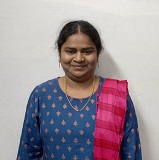
Mrs. A Asha Kiran
Mrs A Asha Kiran currently working as a Asst.Professor and Heading the department of CSE(Data Science). She received B.Tech degree from JNTUK Kakinada,M.Tech degree from JNTUK Kakinada.She is having over 08 Years of teaching experience. She is a Life time member of IAENG. She acted as a resource person for various workshops, FDPs and STTPs in various institutions She organized several guest lectures, workshops, FDPs. She was completed several online certification courses.
All the Staff are Ratified by JNTUH
| S.No | Name of the Faculty | Designation | Qualification | DOJ | Nature Of Association (Regular / Contract) |
|---|---|---|---|---|---|
| 01 |
Mrs A ASHA KIRAN
|
Asst.Prof
|
M.,Tech
|
12/02/2024
|
Regular
|
| 02 |
Mr SHIVA PRASAD
|
Asst. Prof
|
M.Tech
|
12/02/2024
|
Regular
|
| 03 |
Mr SURESH KUMAR
|
Asst. Prof
|
M.Tech
|
13/02/2024
|
Regular
|
| 04 |
Mr N SURESH
|
Asst.Prof
|
M.,Tech
|
13/02/2024
|
Regular
|
| 05 |
Mr LAXMAN NAIK
|
Asst.Prof
|
M.,Tech
|
13/02/2024
|
Regular
|
CSE (Data Science)- Labs
- Computer Programming lab
- Advance Data Structure Lab
- Data Base Management System Lab
- Unified Modeling Language Lab
- Java Lab
- Data Warehousing and Mining Lab
- Software Engineering Lab
- Design and Analysis Algorithms Lab
- Compiler Design Lab
- Linux Programming Lab
- Operating System Labs
- Computer Networking Lab
Attendance & Monitoring Committee
This committee is headed by head of the Department and is assisted by two Associate Professors. The task of this committee is ensure that the students are regular to the college. For this, the attendance status of every class is taken in the second working hour, the absent student’s parents are communicated, and follow-up action is taken.
Training & Placement Committee
The Training & Placement Committee is an interface between the students and the training and placement office. The database of students is maintained by the committee and during the placement drive, one of the committee member will assist TPO and ensure that all the meritorious students in the departments are taken care of placement.
Committee for Student Performance Evaluation
The task of this committee is to identify students whose performance is below 70 percentile in the first and second internal assessment exams. Once the students are identified, their parents are called for and need based counseling is done for the students in presence of their parents. The main objective of this is to ensure that the average performers are taken proper care of and their performance improved and in the process improving the pass percentage.