

Department of Electronics & Communication Engineering (ECE)
Connecting the World Through Innovation

Department of Electronics & Communication Engineering
From Circuits to Communication — Engineering the Signals That Connect the World.
In recent years, electronics the world over, has made unprecedented growth in terms of new technologies, new ideas and principles. The rate of obsolescence of technologies also has been extremely high. Researchers, academicians, industries and the society at large have to work in unison to meet the challenges of the rapidly growing discipline. The research organizations and industries that work in this frontier area are in need of highly skilled and scientifically oriented manpower.
Among the host of activities of the department of electronic science, the major ones are teaching, research and consultancy. The teaching program contains a proper blend of basic concepts and advances in technology. The faculty has succeeded in keeping a lively atmosphere among the students, with timely up gradations in the curriculum and innovative teaching techniques. The teaching is closely coupled with the research activities of the department. Electronics Department is one of the oldest department of our college having well equipped Electronics, Computer and Internet Labs. With the latest technology hardware and software, department is unique in the region.
Explore the ECE Department
Click any tab on the left to explore Vision, Faculty, Labs, Outcomes, and more.
Vision & Mission
PEO, PSO, PO
Course Outcomes (CO)
PAQIC
HOD
Faculty
Labs
Functional Committee
Vision
The vision of ECE department is to become pioneer in higher learning and research and to produce creative solution to societal needs.
Mission
- To provide excellence in education, research and public service.
- To provide quality education and to make the students entrepreneur and employable.
- Continuous upgradation of techniques for reaching heights of excellence in a global.
Programme Educational Objectives (PEOs)
The objectives of Electronics and Communication Engineering are to
PEO 1: Recognize, synthesize and apply the acquired knowledge in basic sciences and mathematics in solving Electronics and Communication Engineering problems.
PEO 2: To prepare and motivate students with recent technological developments related to core subjects like programming, databases and design of compilers.
PEO 3: Graduates will be able to have lifelong learning attitude and improve the professional knowledge.
Programme Specific Outcomes(PSOs):
PSO 1: The ability to absorb and apply fundamental knowledge of core Electronics and Communication Engineering subjects in the analysis, design and development of various types of integrated electronic systems.
PSO 2: To analyse, design and develop solutions for the real time problems and to apply the technical Knowledge for developing quality products for Electronics and Communication based Industry.
Program Outcomes (POs)
PO 1: Engineering Knowledge: Apply the knowledge of mathematics, science, engineering fundamentals, and an engineering specialization to the solution of complex engineering problems.
PO 2: Problem Analysis: Identify, formulate, research literature, and analyze complex engineering problems reaching substantiated conclusions using first principles of mathematics, natural sciences, and engineering sciences.
PO 3: Design/Development of Solutions: Design solutions for complex engineering problems and design system components or processes that meet the specified needs with appropriate consideration for the public health and safety, and the cultural, societal, and environmental considerations.
PO 4: Conduct Investigations of Complex Problems: Use research-based knowledge and research methods including design of experiments, analysis and interpretation of data, and synthesis of the information to provide valid conclusions.
PO 5: Modern Tool Usage: Create, select, and apply appropriate techniques, resources, and modern engineering and IT tools including prediction and modeling to complex engineering activities with an understanding of the limitations.
PO 6: The Engineer and Society: Apply reasoning informed by the contextual knowledge to assess societal, health, safety, legal and cultural issues and the consequent responsibilities relevant to the professional engineering practice.
PO 7: Environment and Sustainability: Understand the impact of the professional engineering solutions in societal and environmental contexts, and demonstrate the knowledge of need for sustainable development.
PO 8: Ethics: Apply ethical principles and commit to professional ethics, responsibilities, and norms of the engineering practice.
PO 9: Individual and Team Work: Function effectively as an individual, and as a member or leader in diverse teams, and in multidisciplinary settings.
PO 10: Communication: Communicate effectively on complex engineering activities with the engineering community and with society. Some of them are, being able to comprehend and write effective reports and design documentation, make effective presentations, and give and receive clear instructions.
PO 11: Project Management and Finance: Demonstrate knowledge and understanding of the engineering and management principles and apply these to one’s own work, as a member and leader in a team, to manage projects and in multidisciplinary environments.
PO 12: Lifelong Learning: Recognize the need for, and have the preparation and ability to engage in independent and lifelong learning in the broadest context of technological change
Course Outcomes (CO)
Electronics and Communication Engineering I & II Sem Course Outcomes for the Academic Year (2021-22)
|
S.No |
Year/ Sem |
Course Name |
Course Outcomes |
|
1 |
II-I |
ELECTRONICDEVICES AND CIRCUITS |
CO1:Know the characteristics of various components |
|
CO2:Understand the utilization of components. |
|||
|
CO3: Understand the biasing techniques. |
|||
|
CO4: Design and analyze small signal amplifier circuits. |
|||
|
CO5: To understand the concepts of simulation by using Spice tool. |
|||
|
2 |
II-I |
NETWORK ANALYSIS AND TRANSMISSI ON LINES |
CO1:Gain the knowledge on basic RLC circuits behavior |
|
CO2 Analyze the Steady state and transient analysis of RLC Circuits. |
|||
|
CO3 Know the characteristics of two port network parameters |
|||
|
CO4 Compare circuit matrices of linear graphs and describe magnetic circuits |
|||
|
CO5 Analyze the transmission line parameters and configurations. |
|||
|
3 |
II-I |
DIGITAL SYSTEM DESIGN |
CO1 Understand the numerical information in different forms and Boolean Algebra theorems |
|
CO2 Postulates of Boolean algebra and to minimize combinational functions. |
|||
|
CO3 Design and analyze combinational and sequential circuits. |
|||
|
CO4 Illustrate reduction of logical expressions using Boolean algebra and k-map. |
|||
|
CO5 Known about the logic families and realization of logic gates. |
|||
|
4 |
II-I |
SIGNALS AND SYSTEMS |
CO1 Differentiate various signal functions. |
|
CO2 Represent any arbitrary signal in time and frequency domain |
|||
|
CO3 Understand the characteristics of linear time invariant systems. |
|||
|
CO4 Analyze the signals with different transform technique |
|||
|
CO5 Analyze discrete time signals and systems by using appropriate mathematical tools. |
|||
|
5 |
II-I |
PROBABLITY THEORY AND STOCHASTIC PROCESS |
CO1 Understand the concepts of Random Process and its Characteristics. |
|
Co2:Understand the response of linear time Invariant system for a Random Processes |
|||
|
CO3 Determine the Spectral and temporal characteristics of Random Signals |
|||
|
CO4 Understand the concepts of Noise in Communication systems |
|||
|
CO5 Create mathematical models for practical design problems and determine theoretical solutions to the created models. |
|||
|
6 |
II-I |
ELECTRONIC DEVICES AND CIRCUITS LAB |
CO1:To understand the concepts of diode, transistor and unipolar junction transistor and its characteristics |
|
CO2 Verify the rectifier circuits using diodes and implement them using hardware. |
|||
|
CO3 Design various amplifiers like CE, CC, common source amplifiers and implement them using hardware and also observe their frequency responses |
|
|
|
|
CO4 Understand the construction, operation and characteristics of JFET |
||||
|
CO5 Understand the construction, operation and characteristics of MOSFET |
|||||||
|
7 |
II-I |
DIGITAL SYSTEM DESIGN LAB |
CO1 Knowledge and use of hardware description language (VHDL) for system modeling and simulation. Describe and explain the operation of fundamental digital gates |
||||
|
CO2 Minimize the Boolean expression using Boolean algebra and design it using logic gates. Analyze the operation of medium complexity standard combinational circuits like the encoder, decoder. |
|||||||
|
CO3 Analyze the operation of medium complexity standard combinational circuits like the multiplexer, demultiplexers, code converters. |
|||||||
|
CO4 Analyze and design of sequential circuits |
|||||||
|
CO5 Design complex digital systems at several level of abstractions; behavioral and structural, synthesis and rapid system prototyping |
|||||||
|
8 |
II-I |
BASIC SIMULATION LAB |
CO1 Analyze various types of signals and sequences |
||||
|
CO2 Apply convolution and correlation operations on different signals. |
|||||||
|
CO3 Determine the response of an LTI system to given signals. |
|||||||
|
CO4 Plot the spectrum of a given signal using MATLAB. |
|||||||
|
CO5 To verify sampling theorem |
|||||||
|
9 |
II-II |
LAPLACE |
CO1:Variables CO1 Use the Laplace transforms techniques for solving ODE’s |
||||
|
CO2 Find the root of a given equation |
|||||||
|
CO3 Estimate the value for the given data using interpolation |
|||||||
|
CO4 Find the numerical solutions for a given ODE’s |
|||||||
|
CO5 Analyze the complex function with reference to their analyticity, integration using Cauchy’s integral and residue theorems |
|||||||
|
10 |
II-II |
ELECTRO MAGNETIC FIELDS AND WAVES |
CO1 Get the knowledge of Basic Laws, Concepts and proofs related to Electrostatic Fields and Magneto static Fields. |
||||
|
CO2 Distinguish between the static and time-varying fields, establish the corresponding sets of Maxwell’s Equations and Boundary Conditions |
|||||||
|
CO3 Analyze the Wave Equations for good conductors, good dielectrics and evaluate the UPW Characteristics for several practical media of interest. |
|||||||
|
CO4 To analyze completely the rectangular waveguides, their mode characteristics, and design wave guides for solving practical problems. |
|||||||
|
CO5 Apply Maxwell‘s equations to solutions of problems relating to transmission lines and uniform plane wave propagation |
|||||||
|
11 |
II-II |
ANALOG AND DIGITAL COMMUNICATIONS |
CO1:Analyze and design of various continuous wave and angle modulation and demodulation |
||||
|
CO2 Understand the effect of noise present in continuous wave and angle modulation techniques |
|||||||
|
CO3 Attain the knowledge about AM , FM Transmitters and Receivers |
|||||||
|
CO4 Analyze and design the various Pulse Modulation Techniques |
|||||||
|
CO5 Understand the concepts of Digital Modulation Techniques and Baseband transmission. |
|||||||
|
12 |
II-II |
LINEAR IC APPLICAITONS |
CO1 A thorough understanding of operational amplifiers with linear integrated circuits. |
||||
|
CO2:Attain the knowledge of functional diagrams and applications of IC 555 and IC 565 |
|||||||
|
CO3 Acquire the knowledge about the Data converters |
|||||||
|
CO4 Classify various active filter configurations based on frequency response and construct using 741 OpAmp. |
|||||||
|
CO5 Analyze and design non linear applications like multiplier, comparator and etc, using Op-Amp. |
|||||||
|
13 |
II-II |
ELECTRONIC CIRCUIT ANALYSIS |
CO1 Design the multistage amplifiers and understand the concepts of High Frequency Analysis of Transistors. |
||||
|
CO2 Utilize the Concepts of negative feedback to improve the stability of amplifiers and positive feedback to generate sustained oscillations |
|||||||
|
CO3 Design and realize different classes of Power Amplifiers and tuned amplifiers useable for audio and Radio applications. |
|||||||
|
CO4 Design Multivibrators and sweep circuits for various applications |
|||||||
|
CO5 To study various modulation techniques |
|||||||
|
14 |
II-II |
ANALOG AND DIGITAL COMMUNICATIONS LAB |
CO1 Demonstrate generation and detection of analog, digital and pulse modulation techniques. |
||||
|
CO2 Explain sampling, PCM, delta modulation, adaptive delta modulation and superheterodyne receiver. |
|||||||
|
CO3 Compare the different analog techniques |
|||||||
|
CO4 Distinguish various line coding schemes used for digital data transmission. |
|||||||
|
CO5 Compare digital modulation techniques. |
|||||||
|
15 |
II-II |
IC APPLICATIONS LAB |
CO1 Design and analyse the various linear applications of op-amp. |
||||
|
CO2 Design and analyse the various non-linear application of op-amp |
|||||||
|
CO3 Design and analyse filter circuits using op-amp |
|||||||
|
CO4 Design and analyse oscillators using OP-Amp |
|||||||
|
CO5 Design and analyse multivibrator circuits using op-amp. |
|||||||
|
16 |
II-II |
ELECTRONIC |
CO1 Comprehend the fundaments of multistage amplifiers, feedback, power amplifiers and oscillator circuits |
||||
|
CO2 Analyze the circuit design process and simulate the common base, common emitter and common collector amplifier circuits |
|||||||
|
CO3 Acquaint with the design and simulate the RC coupled and Cascade amplifier circuits |
|||||||
|
CO4 Discriminate the design and simulate various oscillator circuits |
|||||||
|
CO5 Discriminate the design and simulate RC Phase shift oscillator circuits |
|||||||
|
17 |
III-I |
MICROPROCESSORS AND MICROCONTROLLERS |
CO1:Understands the internal architecture, organization and assembly language programming of 8086 processors. |
||||
|
CO2:Understands the internal architecture, organization and assembly language programming of 8051 microcontrollers |
|||||||
|
CO3: Understands the interfacing techniques to 8086 and 8051 based systems. |
|||||||
|
CO4: Understands the internal architecture of ARM processors and basic concepts of advanced ARM |
|||||||
|
CO5 :Design electrical circuitry to the Microprocessor I/O ports in order to |
|||||||
|
18 |
III-I |
DATA |
CO1:Know the Categories and functions of various Data communication Networks |
||||
|
CO2 Design and analyze various error detection techniques. |
|||||||
|
CO3 Demonstrate the mechanism of routing the data in network layer |
|||||||
|
CO4 Know the significance of various Flow control and Congestion control Mechanisms |
|||||||
|
CO5 Know the Functioning of various Application layer Protocols. |
|||||||
|
19 |
III-I |
CONTROL SYSTEMS |
CO1 Understand the modeling of linear-time-invariant systems using transfer function and state space representations |
|
CO2 Understand the concept of stability and its assessment for linear-time invariant systems. |
|||
|
CO3 Design simple feedback controllers. |
|||
|
CO4 Employ time domain analysis to predict and diagnose transient performance parameters of the system for standard input functions |
|||
|
CO5 Formulate different types of analysis in frequency domain to explain the nature of stability of the system. |
|||
|
20 |
III-I |
ELECTRONIC MEASUREMENTS AND INSTRUMENTATION |
Co1:Measure Electrical parameters with different meters and understand the basic parameters of different meters |
|
CO2.use various types of signal generators and signal analyzers |
|||
|
CO3.operate an oscilloscope to measure various signals |
|||
|
CO4.measure various physical parameters using transducers |
|||
|
CO5.Apply complete knowledge of various elctronic measurement transducers to measure the physical quantitives |
|||
|
21 |
III-I |
BUSINESS ECONOMICE AND FINANCIAL ANALYSIS |
CO1 The students will understand the various Forms of Business and the impact of economic variables on the Business |
|
CO2 The Demand, Supply, Production, Cost, Market Structure, Pricing aspects are learnt. |
|||
|
CO3The Students can study the firm’s financial position by analyzing the Financial Statements of a Company. |
|||
|
CO4 Build up decision making skill under uncertain business climate |
|||
|
CO5 To interpret the basics of financial accounting and relevance of accounting principles |
|||
|
22 |
III-I |
DATA COMMUNICATIONS AND NETWORKS |
CO1 Student will be able to understand network communication using the layered concept, Open System Interconnect (OSI) and the Internet Model |
|
CO2 Student will be able to understand various types of transmission media, network devices; and parameters of evaluation of performance for each media and device. |
|||
|
CO3 Student will be able to understand the concept of flow control, error control and LAN protocols; to explain the design of, and algorithms used in, the physical, data link layers. |
|||
|
CO4 Student will understand the working principles of LAN and network management system |
|||
|
CO5 To learn the concepts behind physical and logical addressing, subnetting and supernetting with respect to TCP protocol |
|||
|
23 |
III-I |
MICROPROCESSORS AND MICROCONTROLLS LAB |
CO1 Set up programming strategies for Microprocessor, microcontrollers and select proper mnemonics and run their program on the training boards. |
|
CO2 Practice different types of programming keeping in mind technical issues and evaluate possible causes of discrepancy in practical experimental observations in comparison |
|||
|
CO3 Develop testing and experimental procedures on Microprocessor analyze their operation under different |
|||
|
CO4 Prepare professional quality textual and computational results using assembly language programming |
|||
|
CO5 Develop testing and experimental procedures on Microcontroller analyze their operation under different cases. |
|||
|
24 |
III-I |
ADVANCED COMMUNICATION SKILLS LAB |
CO1 Acquire vocabulary and use it contextually |
|
CO2 Listen and speak effectively, confidently in formal and informal contexts |
|||
|
CO3 Develop proficiency in academic reading and writing |
|||
|
CO4 Increase possibilities of job prospects |
|||
|
CO5 Activity analysis for mock interview, group discussions |
|||
|
25 |
III-I |
ANTENNAS AND PROPOGATION |
CO1 Acquire vocabulary and use it contextually |
|
CO2 Listen and speak effectively, confidently in formal and informal contexts |
|||
|
CO3 Develop proficiency in academic reading and writing |
|||
|
CO4 Increase possibilities of job prospects |
|||
|
CO5 Activity analysis for mock interview, group discussions |
|||
|
26. |
III-II |
DIGITAL SIGNAL PROCESSING |
CO1 Understand the LTI system characteristics and Multirate signal processing |
|
CO2 Understand the inter-relationship between DFT and various transforms |
|||
|
CO3 Design a digital filter for a given specification. |
|||
|
CO4 Understand the significance of various filter structures and effects of round off errors. |
|||
|
CO5 Understand the fast computation of DFT and appreciate the FFT processing |
|||
|
27 |
III-II |
VLSI DESIGN |
CO1 Acquire qualitative knowledge about the fabrication process of integrated circuits using MOS transistors |
|
CO2 Draw the layout of any logic circuit which helps to understand and estimate parasitic effect of any logic circuit |
|||
|
CO3 Design building blocks of data path systems, memories and simple logic circuits using PLA, PAL, FPGA and CPLD. |
|||
|
CO4 Understand different types of faults that can occur in a system and learn the concept of testing and adding extra hardware to improve testability of system. |
|||
|
CO5 Design simple logic circuit using PLA, PAL, FPGA and CPLD. |
|||
|
28 |
III-II |
EMBEDDED SYSTEM |
CO1 To introduce the Building Blocks of Embedded System |
|
CO2 To Educate in Various Embedded Development Strategies |
|||
|
CO3 To Introduce Bus Communication in processors, Input/output interfacing. |
|||
|
CO4 To impart knowledge in various processor scheduling algorithms. |
|||
|
CO5 To introduce Basics of Real time operating system and example tutorials to discuss on one real time operating system tool |
|||
|
29 |
III-II |
DISASTER PREPARENESS PLANNING & MANAGEMENT (OPEN ELECTIVE-I) |
CO1.THE APPLICATION OF DISASTER CONCEPTS TO MANAGEMENT |
|
CO2.ANALYZING RELATIONSHIP BETWEEN DEVELOPMENT AND DISASTERS |
|||
|
CO3.ABILITY TO UNDERSTAND CATEGORIES OF DISASTERS |
|||
|
C04.REALIZATION OF THE RESPONSIBILITIES TO SOCIETY |
|||
|
|
|||
|
30 |
III-II |
DIGITAL SIGNAL PROCESSING |
CO1 Develop and Implement DSP algorithms in software using a computer language such as C with TMS320C6713 floating point Processor and MATLAB software package. |
|
CO2 Analyze and Observe Magnitude and phase characteristics (Frequency response Characteristics) of digital IIR-Butterworth, Chebyshev filters |
|||
|
CO3 Analyze and Observe Magnitude and phase characteristics (Frequency response Characteristics) of digital FIR filters using window techniques. |
|||
|
CO4 Design and Analyze Digital Filters using EDA Tool. |
|||
|
CO5 Analyze and Observe Frequency response Characteristics of digital IIR filters using window techniques |
|||
|
31 |
III-II |
E-CAD LAB |
CO1 Design entry and simulation of combinational &sequential circuits and functional verification |
|
CO2 Synthesis, p&r and post P & R simulation for combinational and sequential circuits |
|||
|
CO3 Implementation of the combinational &sequential circuits on FPGA hardware |
|||
|
CO4 Write verilog and VHDL code for sequential circuits and understanding design styles |
|||
|
CO5 Write verilog and VHDL code for different combinational circuits |
|||
|
32 |
III-II |
SCRIPTING LANGUAGES LAB |
|
|
CO1 Ability to understand the differences between Scripting languages and programming languages |
|||
|
CO2 Able to gain some fluency programming in Ruby, Perl, TCL |
|||
|
CO3 To implement the concepts of Ruby objects in C |
|||
|
CO4 To gain more knowledge of data structures and packages and perl programming security issues |
|||
|
CO5 To gain more knowledge of perl programming security issues. |
|||
|
33 |
IV-I |
MICROWAVE AND OPTICAL COMMUNICATION |
CO1 Known power generation at microwave frequencies and derive the performance characteristics. |
|
CO2 realize the need for solid state microwave sources and understand the principles of solid state devices |
|||
|
CO3 distinguish between the different types of waveguide and ferrite components, and select proper components for engineering applications. |
|||
|
CO4 understand the utility of S-parameters in microwave component design and learn the measurement procedure of various microwave parameters |
|||
|
CO5 Understand the mechanism of light propagation through Optical Fibers |
|||
|
34 |
IV-I |
NETWORK |
CO1.To understand basics of Cryptography and Network Security. |
|
C02.Understand the enhancement, segmentation and restoration processes on an image. |
|||
|
C03.Implement the various Morphological operations on an image |
|||
|
C04.Understand the need of compression and evaluation of basic compression algorithms. |
|||
|
|
|||
|
35
|
IV-I
|
DIGTIAL IMAGE PROCESSING |
CO1 Understand the LTI system characteristics and Multirate signal processing. |
|
CO2 Understand the inter-relationship between DFT and various transforms |
|||
|
CO3 Design a digital filter for a given specification. |
|||
|
CO4 Understand the significance of various filter structures and effects of round off errors |
|||
|
CO5 Understand the fast computation of DFT and appreciate the FFT processinG |
|||
|
36 |
IV-I |
PROFESSIONAL PRACTICE LAW AND ETHICS |
CO1 The students will understand the importance of professional practice, Law and Ethics in their personal lives and professional careers. The students will learn the rights and responsibilities as an employee, team member and a global citizen.. |
|
CO2 Understanding basic purpose of profession, professional ethics and various moral and social issues |
|||
|
CO3 Awareness of professional rights and responsibilities of a Engineer, safety and risk benefit analysis of a Engineer.. |
|||
|
CO4 Acquiring knowledge of various roles of Enbgineer In applying ethical principles at various professional levels |
|||
|
CO5 Professional Ethical values and contemporary issues |
|||
|
37 |
IV-I |
PRINCIPLES OF ENTERPRENEUR SHIP |
CO1.Natural born entrepreneur, the reluctant entrepreneur, the hidden traits, discovers your own strength. |
|
CO2:Sources of business ideas, how to find & assess ideas? Where to find data for ideation? What is a good problem? Opportunity recognition. |
|||
|
C03:Design thinking for finding solutions, prototyping, idea evaluation, entrepreneurial Outlook, value proposition design, customer insight, ideas development , capstone project presentation. |
|||
|
CO4.Product/Service Feasibility Analysis, Industry & competition analysis, environment analysis, financial feasibility analysis. |
|||
|
CO5.Evaluate the efficiency with which customers can be captured and kept, Early insights on cost of customer acquisition |
|||
|
38 |
IV-I |
MICROWAVE AND OPTICAL COMMUNICATION |
CO1 Verify characteristics of Reflex Klystron. |
|
CO2 Estimate the power measurements of RF Components such as directional Couplers. |
|||
|
CO3 Analyze various parameters of Waveguide Components |
|||
|
CO4 Demonstrate characteristics of various optical sources. |
|||
|
CO5 Measure data Rate, Numerical Aperture and Losses in Optical Link. |
|||
|
39 |
IV-I |
INDUSTRIAL ORIENTED MINI |
CO1 Students will be able to practice acquired knowledge within the chosen area of technology for project development. |
|
CO2 Identify, discuss and justify the technical aspects of the chosen project with a comprehensive and systematic approach |
|||
|
CO3 Reproduce, improve and refine technical aspects for engineering projects. |
|||
|
CO4 Work as an individual or in a team in development of technical projects. |
|||
|
CO5 Communicate and report effectively project related activities and findings. |
|||
|
40 |
IV-I |
SEMINAR |
CO1 Establish motivation for any topic of interest and develop a thought process for technical presentation. |
|
CO2 Organize a detailed literature survey and build a document with respect to technical publications. |
|||
|
CO3 Analysis and comprehension of proof-of-concept and related data. |
|||
|
CO4 Effective presentation and improve soft skills |
|||
|
CO5 Make use of new and recent technology (e.g. Latex) for creating technical reports |
|||
|
41 |
IV-I |
PROJECT STAGE-I |
CO1 Demonstrate a sound technical knowledge of their selected project topic. |
|
CO2 Undertake problem identification, formulation and solution |
|||
|
CO3 Design engineering solutions to complex problems utilising a systems approach.. |
|||
|
CO4 Conduct an engineering project |
|||
|
CO5 Communicate with engineers and the community at large in written an oral forms |
|||
|
42 |
IV-II |
WIRELESS SENSOR NETWORKS |
CO1: Acquire basic knowledge and practical knowledge to implement towards industries. |
|
CO2: Design and testing of electrical components |
|||
|
CO3: Apply project management skills (scheduling work, procuring parts, and documenting expenditures and working within the confines of a deadline). |
|||
|
CO4: Develop and demonstrate troubleshooting ability in Electrical technology. |
|||
|
CO5: Communicate technical information by means of written and oral reports. |
|||
|
43 |
IV-II |
SYSTEM ON CHIP ARCHITECTURE |
CO1: Spell for basic concepts of science and technology |
|
CO2: Contrast the understanding perceptive of techniques applicable to their domain |
|||
|
CO3: Construct the solutions upon their own knowledge |
|||
|
CO4: Improve their Presentation and Communication skills |
|||
|
CO5: Make up them to pursue their placements and higher studies |
|||
|
44 |
IV-II |
ENVIRONMENTAL IMPACT ASSESMENT (OPEN ELECTIVE –III) |
CO1: Acquire basic knowledge and practical knowledge to implement towards industries. |
|
CO2: Design and testing of electrical components |
|||
|
CO3: Apply project management skills (scheduling work, procuring parts, and documenting expenditures and working within the confines of a deadline). |
|||
|
CO4: Develop and demonstrate troubleshooting ability in Electrical technology. |
|||
|
CO5: Communicate technical information by means of written and oral reports. |
|||
|
45 |
IV-II |
PROJECT STAGE – II |
CO1 Demonstrate a sound technical knowledge of their selected project topic |
|
CO2 Undertake problem identification, formulation and solution. |
|||
|
CO3 Design engineering solutions to complex problems utilising a systems approach.. |
|||
|
CO4 Communicate with engineers and the community at large in written an oral forms |
|||
|
CO5 Conduct an engineering project. |
PAQIC
Program Assessment and Quality Improvement Committee
The departmental academic committee is responsible for smooth functioning and monitoring of all academic activities.
Composition
- Head of the department – Convenor
- Three to Five senior faculty members in the department nominated by HOD – Members
Members to the PAQIC UG and PG) will be opted covering each specialization of the department. In very small departments one or more faculty members of other departments may be opted by the HOD with approval of Dean of Academic. One or more external members may be opted by the Convenor, PAQIC on specific occasions such as making the syllabus for new courses, updating / modifying of present syllabus etc. The tenure of the departmental academic committee shall be two years. The composition of the PAQIC shall need approval of the Principal.
Functionalities of PAQIC
- Decide the course structure, detailed syllabus, value added course, professional and open electives, mandatory courses and MOOC courses offered by the department.
- Assign teaching duties to the faculty and to make the facilities available for quality of teaching.
- Allocation of faculty mentors to the new batch of students admitted.
- Review the cases of slow / weak students and decide appropriate action in advance in coordination with faculty mentors.
- Monitoring continuously by the student’s performance and take necessary actions.
- Guide faculty members towards ensuing continuous evaluation.
- Ensuring discipline among students.
- Facilitating and supervising the co-curricular and extracurricular activities of the students.
- Decide award of medals and prizes wherever available based on departmental merit or activities.
The PAQIC will meet as often as necessary. Faculty mentors and other members of the faculty may be invited to meetings when necessary. The PAQIC will seek and review the reports of all course handling faculty and faculty mentors and submit its reports to HOD for remedial action if so needed. The PAQIC recommendations may, if situation so demands to be discussed and amended by a meeting of the total faculty in a department.
|
S No |
Name of the member |
Designation |
Status |
|
1 |
Dr. K.V. Ramprasad | Professor & Head, ECE Department | Chairman |
|
2 |
Dr. H.Raghupathi | Associate Professor | Convener |
|
3 |
H. Somashekar | Associate Professor | Co-Convener |
|
4 |
N. Laxmi | Associate Professor | Member |
|
5 |
B.Swetha | Assistant Professor | Member |
HOD
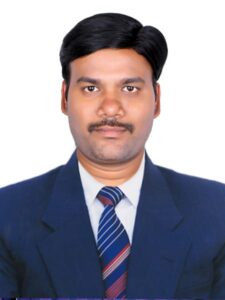
Dr. H.Raghupathi
M.Tech.,Ph.D.
Associate Professor-HOD
Dr. H.Raghupathi was born in the year 1985. He received the B.Tech. Degree from JNT University, Hyderabad in 2007, the M.Tech. Degree from JNT University, Hyderabad in 2013 and received Ph.D. from Dr.M.G.R University, Chennai in 2023. Currently, he is working as HOD, Associate professor, Electronics & Communication Engineering, Visvesvaraya College of Engineering & Technology, Hyderabad, India. He has published more than 20 research papers in various National and International Journals. His areas of interest are Embedded Systems, Communications and VLSI. He is the life member of IETE and ISTE.
All The Staff are Ratified by JNTUH
|
S.No |
Name Of The Faculty |
Designation |
Qualification |
DOJ |
Nature Of Association (Regular / Contract) |
|
01 |
Assoc.Professor,& Hod |
M.Tech.,Ph.D |
02/07/2014 |
Regular
|
|
|
02 |
Professor |
M.Tech, Ph.D |
01/07/2019 |
Regular
|
|
|
03 |
Assoc.Professor, |
M.Tech.,Ph.D |
01/12/2015 |
Regular
|
|
|
04 |
Asst. Prof. |
M.Tech |
16/07/2016 |
Regular
|
|
|
05 |
Asst. Prof. |
M.Tech |
06/12/2017 |
Regular
|
|
|
06 |
Mr.V.Kousik |
Asst. Prof. |
M.Tech |
16/01/2025 |
Regular
|
|
07 |
Mr.Vednidhi Tiwari |
Asst. Prof. |
M.Tech |
01/12/2025 |
Regular
|
|
08 |
Mr K Sreenu |
Asst. Prof. |
M.Tech |
2207/2019 |
Regular
|
|
09 |
Mr. Ch. Chandra Shekar |
Asst. Prof. |
M.Tech |
23/06/2020 |
Regular
|
|
10 |
Ms Prasanna Akkepogu |
Asst. Prof. |
M.Tech |
13/06/2022 |
Regular
|
|
11 |
Mr M Santhosh Reddy |
Asst. Prof. |
M.Tech |
11/07/2022 |
Regular
|
|
12 |
Mrs.T.Swetha |
Asst. Prof. |
M.Tech |
03/10/2023 |
Regular
|
|
13 |
Ms G. Swathimuthyam |
Asst. Prof. |
M.Tech |
28/09/2024 |
Regular
|
|
14 |
Mr.Krishna Nenevath |
Asst. Prof. |
M.Tech |
04/04/2025 |
Regular
|
|
15 |
Mrs.M.Krishnaveni |
Asst. Prof. |
M.Tech |
01/10/2024 |
Regular
|
|
16 |
Mr.P.Rama Krishna |
Asst. Prof. |
M.Tech |
04/04/2025 |
Regular
|
Non-Teaching Staff
| S.No | Name of the Faculty | Designation | Qualificatettion |
|---|---|---|---|
|
1
|
Ms P AKANKSHA
|
Lab Assistant
|
B.TECH
|
|
2
|
Mr B KIRAN
|
Lab Assistant
|
B.TECH
|
|
3
|
Ms M KRISHNAVENI
|
Lab Assistant
|
B.TECH
|
|
4
|
Mr HAYAGREEVAN
|
Lab Assistant
|
B.TECH
|
|
5
|
Ms L RISHITHA
|
Lab Assistant
|
B.TECH
|
|
6
|
Ms C SNEHA
|
Lab Assistant
|
B.TECH
|
|
7
|
Ms N NAVINEETHA
|
Lab Assistant
|
B.TECH
|
ECE-Labs
- Basic Simulation Lab
- Electronics Device Circuits Lab
- Pluse Digital Circuits Lab
- Electronic Circuit Analisys Lab
- E-CAD and IC Lab
- Analog Communication Lab
- Micro Processor Lab and Micro Controller Lab
- Digital Signal Processing Lab
- Micro wave Engg & Digital Communication Lab
- VLSI Lab
Attendance & Monitoring Committee:
This committee is headed by head of the Department and is assisted by two Associate Professors. The task of this committee is ensure that the students are regular to the college. For this, the attendance status of every class is taken in the second working hour, the absent student’s parents are communicated, and follow-up action is taken.
Training & Placement Committee:
The Training & Placement Committee is an interface between the students and the training and placement office. The database of students is maintained by the committee and during the placement drive, one of the committee member will assist TPO and ensure that all the meritorious students in the departments are taken care of placement.
Committee for Student Performance Evaluation:
The task of this committee is to identify students whose performance is below 70 percentile in the first and second internal assessment exams. Once the students are identified, their parents are called for and need based counseling is done for the students in presence of their parents. The main objective of this is to ensure that the average performers are taken proper care of and their performance improved and in the process improving the pass percentage.