
Department of Civil Engineering
Building Sustainable Futures – One Structure at a Time

Department of Civil Engineering
Build Bridges. Design Cities. Leave Something Behind That Lasts a Century
The Department of Civil Engineering was started in the academic year 2010 with an intake of 60. It is headed by Dr. Joga Jayaprakash Reddy with 4 plus years of experience. The Department is endowed with well-qualified experienced and dedicated faculty and committed supporting staff, students of the department are highly enthusiastic and can actively participate in various co-curricular and extracurricular.
All the laboratories of the Department are well equipped to fully satisfy the training of the students and to meet the research, consultancy requirements of the Department. The Department is conducting the seminars, workshops and conferences on the latest developments.
Department of Civil Engineering
| S.No | Programme | Branch | Total Seats |
|---|---|---|---|
| 1 | B-Tech | Civil | 60 |
Explore the Civil Engineering Department
Click any tab on the left to explore Vision, Faculty, Labs, Outcomes, and more.
Vision & Mission
PEO, PSO, PO
Course Outcomes (CO)
HOD
Faculty
Labs
Functional Committee
Vision
To Produce Engineers having Professional and Leadership qualities with capacity to take up Professional and research assignments in Civil Engineering.
Mission
- To impart quality and real time education to the field of Civil Engineering. To deal with the contemporary issues and to cater to the societal needs.
- To impart soft skills, leadership qualities & professional ethics among the students, to develop graduates to compete at the global level.
- To encourage students to pursue higher education and take competitive exams.
Department of Civil Engineering
Program Educational Objectives (PEOs)
Graduates of Civil Engineering programme should be able to,
PEO1: Professionally design and execute Civil Engineering projects, infrastructure development for the
benefit of society.
PEO2: Successfully address technological and managerial challenges.
PEO3: Graduates will have awareness of contemporary professional issues and support the engineering
profession through participation in professional societies and/or educational institutions.
Program Specific Outcomes (PSOs)
Engineering Graduates will be able to:
PSO1: Analysis and Design of structures, transportation systems, water resources and Ability to apply
principles of Civil Engineering for the entire life cycle of the project ranging from initial design to the closure
of the project.
PSO2: Demonstrate proficiency in one the following specialized areas of Civil Engineering Construction
Materials an Management, Structural and Geotechnical Engineering, Environmental and Water Resources
Engineering, Transportation Engineering and Remote Sensing & Geographic Information Systems.
Program Outcomes (POs)
PO1: Engineering Knowledge: Apply the knowledge of mathematics, science, engineering fundamentals, and an engineering specialization to the solution of complex engineering problems.
PO2: Problem Analysis: Identify, formulate, research literature, and analyze complex engineering problems reaching substantiated conclusions using first principles of mathematics, natural sciences, and engineering sciences.
PO3: Design/Development of Solutions: Design solutions for complex engineering problems and design system components or processes that meet the specified needs with appropriate consideration for the public health and safety, and the cultural, societal, and environmental considerations.
PO4: Conduct Investigations of Complex Problems: Use research-based knowledge and research methods including design of experiments, analysis and interpretation of data, and synthesis of the information to provide valid conclusions.
PO5: Modern Tool Usage: Create, select, and apply appropriate techniques, resources, and modern engineering and IT tools including prediction and modeling to complex engineering activities with an understanding of the limitations.
PO6: The Engineer and Society: Apply reasoning informed by the contextual knowledge to assess societal, health, safety, legal and cultural issues and the consequent responsibilities relevant to the professional engineering practice.
PO7: Environment and Sustainability: Understand the impact of the professional engineering solutions in societal and environmental contexts, and demonstrate the knowledge of need for sustainable development.
PO8: Ethics: Apply ethical principles and commit to professional ethics, responsibilities, and norms of the engineering practice.
PO9: Individual and Team Work: Function effectively as an individual, and as a member or leader in diverse teams, and in multidisciplinary settings.
PO10: Communication: Communicate effectively on complex engineering activities with the engineering community and with society. Some of them are, being able to comprehend and write effective reports and design documentation, make effective presentations, and give and receive clear instructions.
PO11: Project Management and Finance: Demonstrate knowledge and understanding of the engineering and management principles and apply these to one’s own work, as a member and leader in a team, to manage projects and in multidisciplinary environments.
PO12: Lifelong Learning: Recognize the need for, and have the preparation and ability to engage in independent and lifelong learning in the broadest context of technological change
Department of Civil Engineering
Course Outcomes (CO)
Civil Engineering – HOD
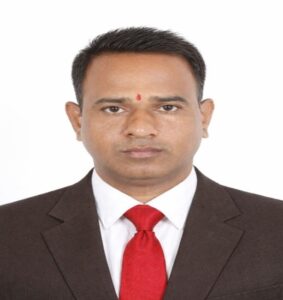
Mr. M. Rajender Reddy is the Head of the Department of Civil Engineering with over 10 years of teaching experience and strong exposure to construction practices and academic research. He holds a Master of Technology in Structural Engineering from Jawaharlal Nehru Technological University Hyderabad (JNTUH).
He has extensive knowledge in structural engineering, construction technology, building planning, and civil engineering fundamentals. With a blend of academic excellence, industry exposure, and research contributions, he actively contributes to strengthening the academic environment and promoting innovation in the Civil Engineering department.
Mr. Rajender Reddy has 4 years of research experience and has published research papers in international and national journals, reflecting his dedication to advancing knowledge in structural engineering and construction practices.
As the Head of the Department, he focuses on outcome-based education (OBE), student skill development, real-time research projects, and industry-oriented learning, aligning the department with AUTONOMUS and NAAC quality standards.
Department of Civil Engineering
All the Staff are Ratified by JNTUH
|
S.No |
Name of the Faculty |
Designation |
Qualification |
DOJ |
Nature Of Association (Regular / Contract) |
|
1 |
Mr. RAJENDER REDDY |
HOD Assoc Professor |
M.Tech.,(Ph.D) |
25/04/2017 |
Regular |
|
2 |
Dr. JOGA JAYAPRAKASH REDDY |
Professor &TPO |
M.Tech,, Ph.D |
01/08/2022 |
Regular |
|
3 |
Mr. SHASHIDHAR REDDY |
Assoc Professor |
M.Tech.,(Ph.D) |
02/01/2019 |
Regular |
|
4 |
M PRANAYKUMAR |
Assoc Professor |
M.Tech.,(Ph.D) |
10/01/2020 |
Regular |
|
5 |
Mr.R. TULJA PRASAD |
Assoc Professor |
M.Tech |
04/05/2017 |
Regular |
|
6 |
Mr. MAHESH |
Assoc Professor |
M.Tech |
03/05/2017 |
Regular |
|
7 |
MS B SRAVANI |
Asst Professor |
M.Tech |
15/12/2021 |
Regular |
|
8 |
Mr.K ABHILASH |
Asst Professor |
M.Tech |
06/05/2025 |
Regular |
|
9 |
Mr M. SRIKANTH |
Asst Professor |
M.Tech |
20/11/2025 |
Regular |
|
10 |
Mr.S,SUDHAKAR |
Asst Professor |
M.Tech |
20/11/2025 |
Regular |
|
11 |
Mr. KETHAVATH DASHARATH |
Asst Professor |
M.Tech |
31/01/2018 |
Regular |
|
12 |
Mr SRIDHAR NENAVATH |
Asst Professor |
M.Tech |
31/07/2018 |
Regular |
|
13 |
Mr.SAGAR RAJASHEKAR |
Assoc Professor |
M.Tech |
01/05/2017 |
Regular |
Civil Engineering – Labs
- Surveying Lab
- Strength of Material Lab
- Computer Aided Drafting of Buildings Lab
- Fluid Mechanics & Hydraulic Machines Lab
- Engineering Geology Lab
- Geotechnical Engineering
- Environmental Engineering Lab
- Concrete & Highway Materials Lab
Attendance & Monitoring Committee
This committee is headed by head of the Department and is assisted by two Associate Professors. The task of this committee is ensure that the students are regular to the college. For this, the attendance status of every class is taken in the second working hour, the absent student’s parents are communicated, and follow-up action is taken.
Training & Placement Committee
The Training & Placement Committee is an interface between the students and the training and placement office. The database of students is maintained by the committee and during the placement drive, one of the committee member will assist TPO and ensure that all the meritorious students in the departments are taken care of placement.
Committee for Student Performance Evaluation
The task of this committee is to identify students whose performance is below 70 percentile in the first and second internal assessment exams. Once the students are identified, their parents are called for and need based counseling is done for the students in presence of their parents. The main objective of this is to ensure that the average performers are taken proper care of and their performance improved and in the process improving the pass percentage.